Industrial Shredders Explained: Materials, Processes, and Advantages
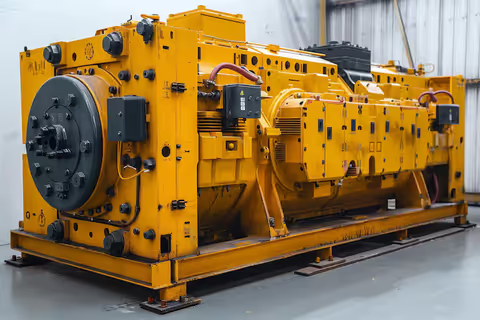
Industrial shredders are heavy-duty machines designed to reduce large volumes of material into smaller, more manageable pieces. They are commonly used to break down solid waste, scrap materials, and industrial by-products into uniform sizes suitable for further processing, recycling, or disposal. Unlike household shredders, industrial shredding systems are built to handle high loads, continuous operation, and a wide range of tough materials.
The development of industrial shredders is closely linked to industrial growth and the increasing need for efficient material handling. As manufacturing expanded and consumption increased, industries faced challenges in managing waste, excess materials, and end-of-life products. Shredders emerged as a mechanical solution to reduce volume, improve handling efficiency, and support material recovery processes.
From an engineering perspective, industrial shredders combine cutting, tearing, and shearing forces to process materials. Their existence reflects the broader goal of optimizing industrial workflows, improving waste management practices, and supporting environmental responsibility through material reuse and recycling.
Importance: Why Industrial Shredders Matter Today
Industrial shredders play a critical role in modern industrial and environmental systems. They affect a wide range of sectors, including manufacturing, recycling, construction, mining, and waste management. As global material consumption continues to rise, the need for efficient size reduction and material separation has become more important than ever.
Key reasons industrial shredders matter today include:
-
Waste volume reduction: Shredding significantly reduces the size of bulky materials, making transportation and storage more efficient.
-
Recycling efficiency: Smaller, uniform material sizes improve downstream processes such as sorting, melting, or compaction.
-
Operational safety: Controlled shredding reduces hazards associated with handling large or sharp industrial waste.
-
Environmental impact: Effective shredding supports recycling systems and reduces landfill dependency.
Industries benefit from industrial shredders by improving process efficiency and meeting sustainability goals. At the same time, communities and regulators benefit from reduced environmental strain and improved compliance with waste management standards.
Recent Updates: Trends and Developments in the Past Year
Over the past year, industrial shredding technology has continued to evolve, driven by automation, data integration, and environmental considerations. In 2025, manufacturers increasingly focused on integrating smart monitoring systems into shredders. These systems use sensors to track blade wear, energy usage, and throughput in real time, supporting predictive maintenance and reducing downtime.
Another notable trend observed in late 2025 is the growing emphasis on energy-efficient shredding systems. Improved motor designs and optimized cutting geometries are being adopted to reduce power consumption while maintaining processing capacity. This aligns with broader industrial efforts to lower energy intensity and carbon footprints.
Material versatility has also been a key update. Newer shredders are designed to handle mixed-material inputs, such as composites and multi-layer packaging, which were previously difficult to process. This change reflects the evolving composition of industrial and consumer waste streams.
Laws and Policies: Regulatory Influence on Industrial Shredding
Industrial shredders are influenced by environmental, safety, and waste management regulations in many countries. Governments often set rules on how industrial waste should be handled, processed, and documented, which directly affects shredding operations.
Common regulatory areas include:
-
Environmental protection laws: Regulations often require waste to be treated or reduced before disposal, encouraging shredding as a preprocessing step.
-
Occupational safety standards: Industrial equipment must meet safety requirements related to guarding, noise levels, and operator protection.
-
Recycling and circular economy policies: Many national programs promote material recovery and reuse, indirectly supporting the adoption of shredding technologies.
In several regions, updated waste management frameworks introduced between 2024 and 2025 emphasize traceability and responsible handling of industrial waste. These policies reinforce the importance of standardized shredding processes that support compliant and transparent material flows.
Tools and Resources: Supporting Industrial Shredder Understanding
A range of tools and resources can help professionals and learners better understand industrial shredders and their applications. These resources focus on technical knowledge, process optimization, and regulatory awareness.
Helpful tools and resources include:
-
Material size reduction calculators that estimate output size based on cutter configuration
-
Energy consumption assessment tools for evaluating power usage in shredding systems
-
Technical standards documents covering safety and machine performance
-
Industry association websites offering white papers and research on shredding and recycling technologies
-
Maintenance planning templates to track blade wear and servicing intervals
These resources support informed decision-making and help align shredding operations with technical and regulatory expectations.
Materials Processed by Industrial Shredders
Industrial shredders are designed to handle a wide variety of materials. Their versatility is one of their defining features.
Common materials include:
-
Metals such as aluminum, steel, and mixed scrap
-
Plastics including rigid containers, films, and molded parts
-
Wood and biomass like pallets, branches, and production offcuts
-
Rubber such as tires and industrial gaskets
-
Paper and cardboard from packaging and production waste
The choice of shredder configuration depends on material hardness, thickness, and desired output size.
Shredding Processes and Machine Types
Industrial shredding is not a single process but a category of size-reduction methods. Different machines are used depending on application requirements.
| Shredder Type | Typical Use Case | Output Characteristics |
|---|---|---|
| Single-shaft shredder | General waste and plastics | Uniform particle size |
| Dual-shaft shredder | Bulky or tough materials | Coarse, irregular output |
| Granulator | Secondary size reduction | Fine, consistent granules |
| Hammer mill | Metals and aggregates | High-impact fragmentation |
Each process is selected based on throughput needs, material properties, and downstream processing goals.
Advantages of Industrial Shredders
Industrial shredders offer multiple functional and operational advantages across industries.
Key advantages include:
-
Improved material handling through size uniformity
-
Enhanced recycling potential by preparing materials for separation
-
Reduced environmental burden by lowering waste volume
-
Operational consistency in high-throughput environments
The cumulative effect of these advantages supports more efficient industrial ecosystems and contributes to long-term resource management strategies.
FAQs: Common Questions About Industrial Shredders
What is the main purpose of an industrial shredder?
The main purpose is to reduce material size to improve handling, processing efficiency, and material recovery.
Can one shredder process different materials?
Some industrial shredders are designed for multi-material input, but cutter design and power ratings must match material properties.
How does shredding support recycling?
Shredding creates uniform material sizes, making sorting, melting, or compaction more effective in recycling workflows.
Are industrial shredders energy intensive?
Energy usage varies by design and application. Recent designs focus on improved efficiency and optimized power consumption.
What factors influence shredder performance?
Material type, cutter configuration, motor power, and maintenance practices all affect performance.
Conclusion
Industrial shredders are a foundational component of modern material management systems. They exist to address practical challenges related to waste volume, material handling, and recycling efficiency. Their importance continues to grow as industries and governments place greater emphasis on sustainability, safety, and regulatory compliance.
Recent technological updates highlight a shift toward smarter, more energy-aware shredding solutions capable of handling complex material streams. At the same time, evolving laws and policies reinforce the need for standardized and responsible material processing practices.
By understanding the materials, processes, and advantages associated with industrial shredders, readers can better appreciate their role in industrial operations and environmental stewardship. These machines are not just tools for size reduction; they are integral to efficient, compliant, and forward-looking industrial systems.