A Complete Guide to Industrial Fluid Control in Modern Industries
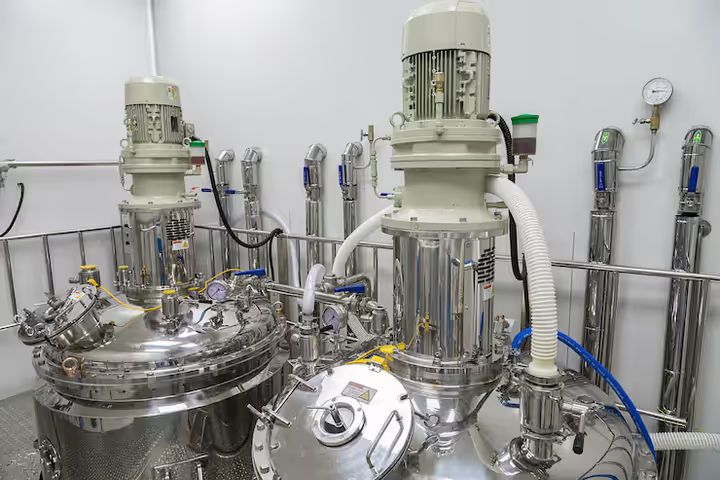
Industrial fluid control refers to the methods, systems, and technologies used to manage the movement, pressure, temperature, and direction of fluids within industrial processes. Fluids may include liquids, gases, or slurries that are essential for operations in manufacturing, energy production, chemicals, water treatment, food processing, and pharmaceuticals.
The concept exists because modern industries rely on precise and predictable fluid behavior. Without controlled flow, pressure, and isolation, industrial systems would face inefficiencies, safety risks, and inconsistent output. Industrial fluid control systems combine mechanical components, digital monitoring, and automation technologies to ensure fluids behave exactly as required within complex industrial environments.
At its core, industrial fluid control supports operational stability. It enables machines, pipelines, and processing units to function as intended, even under high pressure, extreme temperatures, or continuous operation.
Importance: Why Industrial Fluid Control Matters Today
Industrial fluid control has become increasingly important as industries grow more automated, interconnected, and efficiency-driven. Modern facilities operate with tighter tolerances and higher expectations for reliability and environmental responsibility.
This topic affects a wide range of stakeholders, including plant operators, engineers, compliance teams, infrastructure planners, and regulators. Even end users indirectly benefit through safer products, stable utilities, and reduced environmental impact.
Key problems that industrial fluid control helps solve include:
-
Unstable flow leading to production inconsistencies
-
Pressure fluctuations that damage equipment
-
Leakage and fluid loss affecting safety and efficiency
-
Energy waste due to poor flow regulation
-
Difficulty in monitoring complex fluid networks
In industries such as power generation and chemical processing, precise fluid control supports system safety. In water treatment and food processing, it contributes to quality consistency and hygiene standards. As sustainability goals become more prominent, optimized fluid control also plays a role in reducing waste and energy consumption.
Recent Updates: Trends and Developments in the Past Year
Over the past year, industrial fluid control has continued to evolve alongside broader industrial automation and digital transformation trends.
In 2025, several developments have gained attention across global industries:
-
Increased use of smart valves and sensors (2024–2025): These components integrate with industrial automation systems to provide real-time data on flow rate, pressure, and temperature.
-
Expansion of Industrial IoT adoption: Fluid control systems are increasingly connected to centralized monitoring platforms, enabling predictive maintenance and system optimization.
-
Focus on energy efficiency standards: Many industrial facilities updated internal benchmarks in late 2024 to align fluid handling with energy management frameworks.
-
Improved materials and coatings: Recent advancements have improved resistance to corrosion, abrasion, and extreme temperatures, extending system lifespan.
The shift toward data-driven operations has made fluid control systems more transparent and measurable, supporting better decision-making at both operational and policy levels.
Laws and Policies: Regulatory Influence on Industrial Fluid Control
Industrial fluid control is closely influenced by laws, standards, and regulatory frameworks, which vary by country but share common objectives related to safety, efficiency, and environmental protection.
In many regions, including India, the European Union, and North America, regulations address:
-
Industrial safety standards for pressure systems and pipelines
-
Environmental compliance related to emissions, discharge, and leakage
-
Water management and conservation policies
-
Energy efficiency and industrial performance benchmarks
For example, industrial facilities must often comply with occupational safety rules governing pressure vessels and fluid transport systems. Environmental regulations may require accurate monitoring of fluid discharge, especially in chemical and wastewater operations.
Government-led industrial modernization programs also encourage the adoption of automation, digital monitoring, and efficient fluid handling practices. These policies indirectly shape how industrial fluid control systems are designed and implemented, pushing industries toward safer and more transparent operations.
Tools and Resources: Helpful References for Industrial Fluid Control
A variety of tools and resources support understanding, designing, and monitoring industrial fluid control systems. These resources are widely used in engineering, education, and compliance contexts.
Commonly referenced tools and platforms include:
-
Flow rate calculators: Used to estimate fluid behavior under varying conditions
-
Pressure drop estimation tools: Help analyze system performance in pipelines
-
Industrial automation platforms: Integrate fluid control with PLC and SCADA systems
-
Standards documentation: Technical guidelines published by recognized industry bodies
-
Simulation software: Models fluid dynamics for system planning and optimization
Below is a simplified table showing common fluid control components and their primary functions:
| Component Type | Primary Function | Typical Applications |
|---|---|---|
| Valves | Regulate or isolate flow | Manufacturing, energy |
| Actuators | Automate valve movement | Automated plants |
| Sensors | Measure flow and pressure | Monitoring systems |
| Controllers | Manage system logic | Industrial automation |
These tools and resources contribute to consistent design practices and informed operational decisions.
Frequently Asked Questions About Industrial Fluid Control
What is the main purpose of industrial fluid control systems?
The main purpose is to manage fluid flow, pressure, and direction to ensure stable, safe, and efficient industrial operations.
Which industries rely most on industrial fluid control?
Industries such as manufacturing, oil and gas, power generation, water treatment, chemicals, and food processing rely heavily on fluid control systems.
How does industrial automation relate to fluid control?
Automation allows fluid control components to operate automatically using sensors, controllers, and digital systems, improving accuracy and reliability.
What role do sensors play in fluid control systems?
Sensors provide real-time data on flow rate, pressure, and temperature, helping operators monitor system performance and detect irregularities.
Is industrial fluid control important for sustainability goals?
Yes, efficient fluid control supports reduced waste, lower energy use, and better resource management, aligning with sustainability objectives.
Conclusion: The Role of Industrial Fluid Control in Modern Systems
Industrial fluid control remains a foundational element of modern industrial infrastructure. As industries become more automated and data-driven, the ability to precisely manage fluids has moved beyond basic mechanical functions to integrated digital systems.
By supporting safety, efficiency, compliance, and sustainability, industrial fluid control continues to adapt to evolving industrial demands. Understanding its context, importance, regulatory environment, and supporting tools helps clarify why it remains essential across so many sectors.
As technology and policy continue to shape industrial operations, fluid control systems will remain central to reliable and responsible industrial growth.